
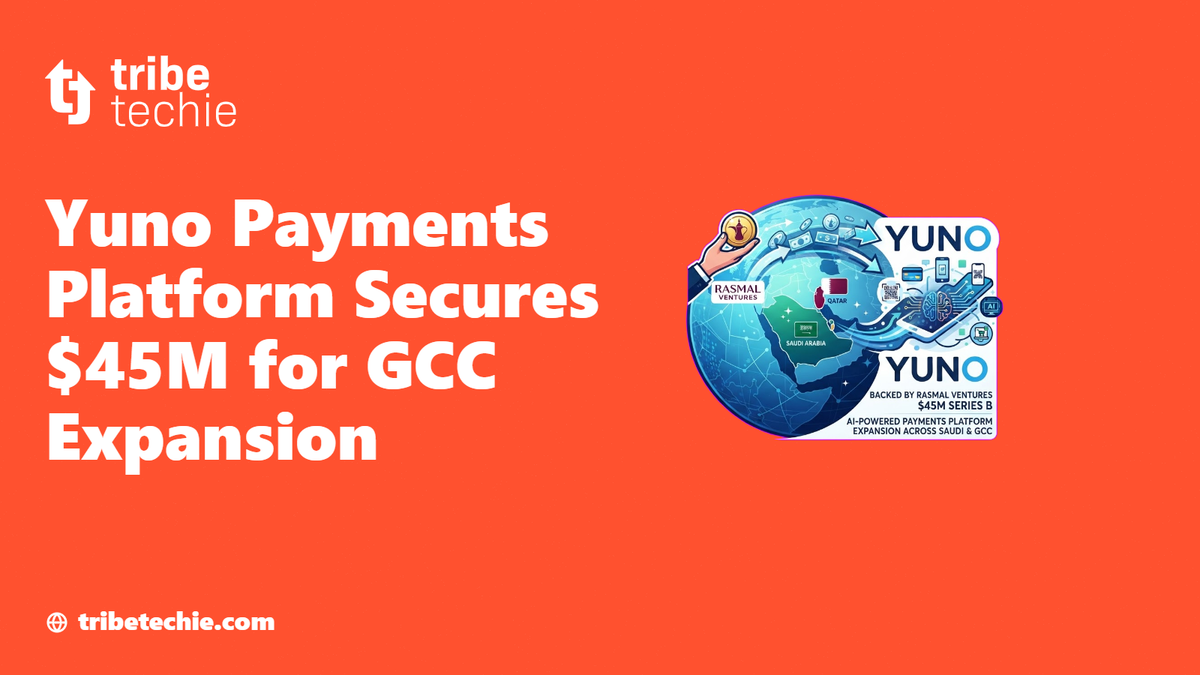
Qatar’s Rasmal Ventures is backing the Yuno payments platform in a $45M Series B round as the company expands across Saudi Arabia and the GCC. The round was led by Global PayTech Ventures, with participation from Andreessen Horowitz, Tiger Global, QuantumLight Capital, Monashees, Kaszek, and Endeavor Catalyst.
Rasmal joined as a strategic regional investor alongside GrowthX Capital and Abu Dhabi-based Further Ventures. Yuno provides payments infrastructure for enterprises, banks, and digital wallets, connecting businesses to more than 1,000 payment methods and over 460 integrations across 190 countries through a single API.
Also Read: Globant Launches Glob.AI for Enterprise AI Services
Yuno Payments Platform Regional Strategy
Rasmal’s investment comes as the company strengthens its position in the Gulf, with Qatar serving as its regional base. The company has established a regional office in Qatar and has expanded its capabilities in Saudi Arabia.
In April 2026, Yuno Payments Arabia received Payment Technical Service Provider certification from the Saudi Central Bank, supporting its ability to provide payment technology services in the Kingdom. Yuno has also partnered with Tap Payments to access local payment rails including Mada, KNET, and NAPS across all six GCC markets.
A separate partnership with buy-now-pay-later provider Tabby has connected Yuno to more than 25 million shoppers across Saudi Arabia and the UAE. The expansion gives Yuno access to some of the region’s fastest-growing digital commerce markets while allowing global merchants to connect to local payment methods through a single infrastructure layer.
Investor Perspectives on Growth
For Rasmal Ventures, the investment reflects its strategy of establishing relationships with companies and supporting their entry into GCC markets before deploying capital. Soumaya Ben Beya Dridje, Partner at Rasmal Ventures, said Yuno’s ability to combine global infrastructure with local market capabilities was a key reason for the investment.
“The hardest problem in payments is being genuinely local everywhere, and Yuno has solved it at global scale,” she said. GrowthX Capital founder Hamad Al Hajri also highlighted Yuno co-founder and CEO Juan Pablo Ortega’s previous entrepreneurial track record, describing the platform as his next major venture.
Go deeper on GCC & Africa tech — $9.99/month.
Deep dives and investor insights the free digest doesn't cover.
Scaling Global Payment Infrastructure
The company’s platform provides merchants with access to payment methods, intelligent transaction routing, one-click checkout, and AI-powered fraud detection. Yuno says its infrastructure recovered more than $5 billion in failed transaction volume over the past year, increasing authorization rates by approximately 5%.
The company also reports that its technology helped customers save more than $500 million in processing costs during the same period. Its customer base includes global brands such as McDonald’s, NetEase Games, GoFundMe, inDrive, and Rappi.
Juan Pablo Ortega, Co-Founder and CEO of Yuno, said the new capital would be used to keep pace with customer growth while extending the company's lead in global infrastructure. “Most companies raise a Series B to buy growth. We're raising ours to meet our customers' growth, and extend our lead, with a clear line to profitability in the year ahead,” Ortega said.
Why it matters to MENA
Rasmal’s investment comes at a significant moment for the region’s payments industry. The Middle East is experiencing rapid growth in real-time payments, digital commerce, mobile wallets, and alternative payment methods.
As consumers and businesses adopt more digital options, merchants increasingly need infrastructure capable of handling different payment rails, currencies, and regulatory requirements. Yuno’s model addresses this fragmentation by giving businesses access to multiple payment methods through a single technology layer.
Its growing presence across the GCC is significant because the region is becoming an increasingly important corridor for trade between the Middle East, Asia, and other global markets. The investment also highlights Qatar’s growing role as a landing point for international fintech companies looking to expand across the GCC.
For MENA’s venture capital ecosystem, the deal is another example of regional investors moving beyond purely financial participation to provide market access and local operating support. It reflects the growing convergence between global fintech infrastructure and the Gulf’s rapidly expanding digital economy.
Engagement