
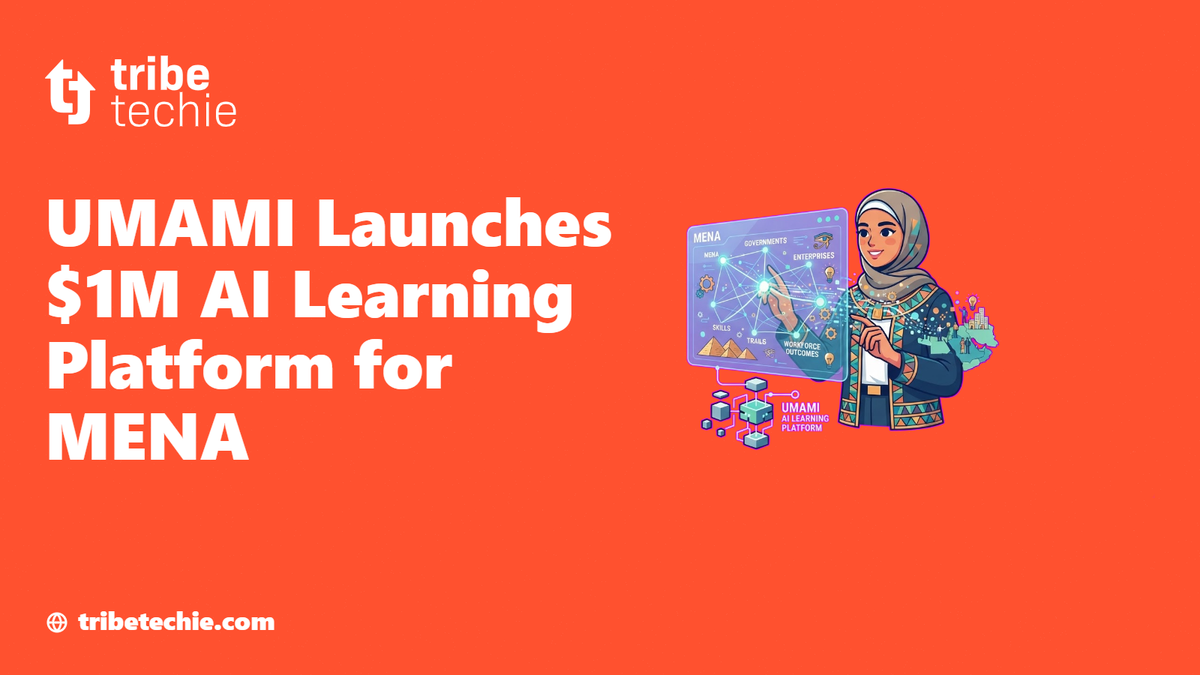
The Egyptian edtech UMAMI has officially launched a $1M AI learning platform designed to help MENA governments and enterprises connect training, skills, and workforce outcomes.
The platform is tailored for governments, ministries, educational institutions, and large organisations seeking to connect learning, skills development, and workforce performance through a single digital infrastructure.
Also Read: Telna, Bayobab Expand Travel eSIM Services in Africa
UMAMI stated that the system addresses a growing challenge among institutions that invest heavily in training but often lack the tools to measure how learning translates into workforce readiness and organisational outcomes.
The AI Learning Platform Ecosystem
LOS™ brings learning data, skills, performance, and decision-making into one ecosystem. The platform is designed to support different institutional environments, including formal education, healthcare, technical and vocational education and training (TVET), and corporate learning.
Rather than focusing solely on content delivery, UMAMI said LOS™ is intended to help organisations track capability development. It enables leadership to use learning data to inform workforce and institutional decisions.
The company is positioning the platform as an operating layer for learning and human-capital development. It functions similarly to how enterprise resource planning (ERP) systems connect business operations or how customer relationship management (CRM) platforms organise customer data.
Regional Recognition and Growth
The launch follows UMAMI’s recognition as one of the first Egyptian companies to receive the official Startup Label Certificate under Egypt’s Startup Charter. The government-backed framework recognises technology startups based on criteria including innovation, scalability, and investment readiness.
Go deeper on GCC & Africa tech — $9.99/month.
Deep dives and investor insights the free digest doesn't cover.
UMAMI has also been named among the 2026 Top 100 Entrepreneurs in Africa by African Business Heroes. This adds to its growing profile within the continent’s technology and entrepreneurship ecosystem.
“Launching LOS™ marks a defining milestone in our journey as we transition from delivering digital learning solutions to building intelligent learning infrastructure,” said Ahmed Seif El-Din, Co-Founder and CEO of UMAMI E-Learning Solutions.
He added that the company aims to use AI and intelligent architectures to help governments and organisations develop human capabilities at scale across Egypt and the wider region.
Scaling Impact Across MENA
UMAMI has supported learning and workforce development initiatives across more than 35 countries. With LOS™, the company plans to build on that experience by providing institutions with infrastructure capable of adapting learning programmes to changing workforce requirements.
The platform arrives as governments and businesses across MENA increase investment in digital transformation, skills development, and workforce readiness. By combining AI, learning analytics, and skills management, UMAMI is seeking to position its technology as part of the region’s broader push to build more adaptable and digitally skilled workforces.
Why it matters to MENA
UMAMI’s platform addresses a major regional priority: building workforce skills that match rapidly changing digital economies. Governments across MENA are investing heavily in AI, digital transformation, and human-capital development, but measuring whether training actually improves workforce readiness remains a challenge.
By connecting learning data with skills and performance insights, LOS™ could help governments, universities, and businesses move from simply delivering training to measuring its impact.
The development is particularly relevant to countries pursuing knowledge-economy strategies, including Egypt, Saudi Arabia, and the UAE, where AI adoption and workforce transformation are central to economic diversification. It also highlights the growing role of African edtech companies in developing technology for the wider MENA market.
Engagement