
Launching a startup is rarely a straight line. One week, you are validating an idea. The next week, you are looking for your first customers. Before long, you are hiring your first employee, pitching investors and wondering how artificial intelligence can help your team work more efficiently.
The challenge is that founders often search for answers one question at a time. They read about fundraising before validating an idea, think about hiring before finding product-market fit or invest in growth before establishing a pricing strategy.
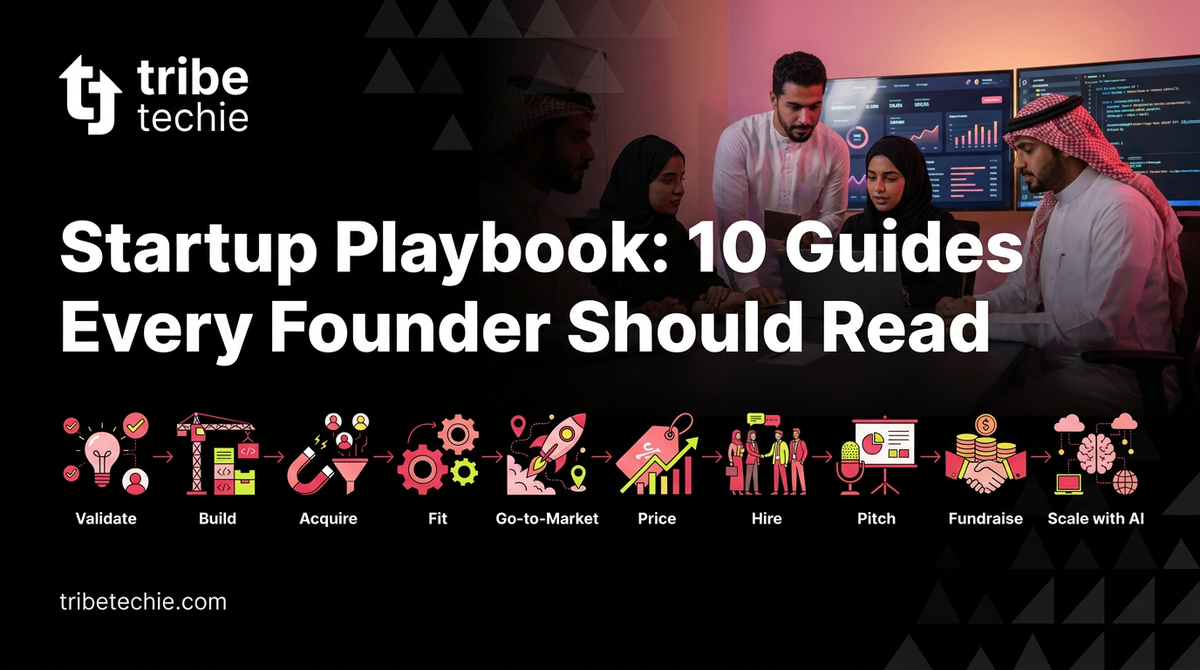
The Startup Playbook brings those pieces together. Built for founders across Africa and the GCC, this evergreen resource follows the natural journey of building a startup—from idea validation to fundraising and operational efficiency.
Whether you are launching your first company or refining an existing venture, these practical guides will help you make better decisions at every stage.
Stage 1: Validate Your Idea
Every successful startup begins with the same question: Does anyone actually need this?
Skipping validation is one of the fastest ways to waste time, money and energy. Before building a product or writing a line of code, founders should understand the problem they are solving and whether customers genuinely care.
Read: How to Validate a Startup Idea Before You Build Anything
Stage 2: Build Your MVP
Once your idea is validated, the next goal is speed, not perfection.
Your minimum viable product (MVP) should help you learn from real users as quickly as possible. Today, no-code tools and AI-powered platforms make it possible for many founders to build and test products without hiring a full engineering team.
Read: How to Build an MVP Without Developers
Stage 3: Find Your First Customers
Building a product is only half the challenge.
The next milestone is proving that people are willing to use it.
Your first 100 customers will shape your product, reveal hidden assumptions and generate the feedback needed to improve what you have built.
Read: How to Get Your First 100 Customers
Stage 4: Achieve Product-Market Fit
Early customer interest is encouraging and consistent demand is transformative.
Product-market fit happens when customers repeatedly find value in your solution and continue coming back. It is also one of the strongest signals investors look for before committing capital.
Read: How to Find Product-Market Fit
Stage 5: Build a Go-to-Market Strategy
A great product still needs a clear route to customers.
Your go-to-market strategy defines who you serve, how you reach them and why they should choose your solution over the alternatives. It turns product development into sustainable business growth.
Read: How to Build a Go-to-Market Strategy
Stage 6: Price Your Product
Beyond being a revenue decision, pricing shapes customer perception, influences growth and determines whether your business can scale sustainably.
Many startups underprice themselves in pursuit of growth. Others overprice before establishing value. Learning to strike the right balance is essential.
Go deeper on GCC & Africa tech — $9.99/month.
Deep dives and investor insights the free digest doesn't cover.
Stage 7: Hire Your First Employees
Every founder eventually reaches a point where doing everything alone becomes impossible.
Your first hires will shape your company culture, strengthen your execution and influence how your startup grows. Hiring slowly and hiring well often creates a stronger foundation than expanding too quickly.
Read: How to Hire Your First Startup Employees
Stage 8: Build Your Pitch Deck
By now, your startup should have evidence, traction and a clear story.
The next challenge is communicating that story to investors.
A great pitch deck is not about impressive design. It is about demonstrating that your business is solving a meaningful problem with a credible path to growth.
Read: How to Build a Startup Pitch Deck
Stage 9: Raise Pre-Seed Funding
Fundraising is often misunderstood, but investors do not simply back ideas. They back evidence, momentum and founders who understand their market.
Knowing when—and how—to raise pre-seed funding can dramatically improve your chances of securing investment.
Read: How to Raise Pre-Seed Funding
Stage 10: Use AI to Scale Smarter
Artificial intelligence is changing how startups operate.
The biggest opportunity is not replacing founders. It is helping lean teams automate repetitive work, improve decision-making and focus more time on customers, strategy and innovation. Used thoughtfully, AI can become one of a startup's greatest competitive advantages.
Read: How to Use AI for Startups More Efficiently
Where Are You on Your Founder Journey? This Startup Playbook Will Guide You
If you are just getting started:
- Validate your idea
- Build an MVP
- Get your first customers
If you have early traction:
- Find product-market fit
- Build a go-to-market strategy
- Get your pricing right
If you are preparing to scale:
- Hire your first employees
- Build your pitch deck
- Raise pre-seed funding
- Use AI to run your startup more efficiently
Founders deserve practical, evidence-based guidance that reflects the realities of building businesses in fast-growing innovation ecosystems.
Whether you are launching your first startup or preparing for your next funding round, this playbook is designed to grow with you.
Engagement