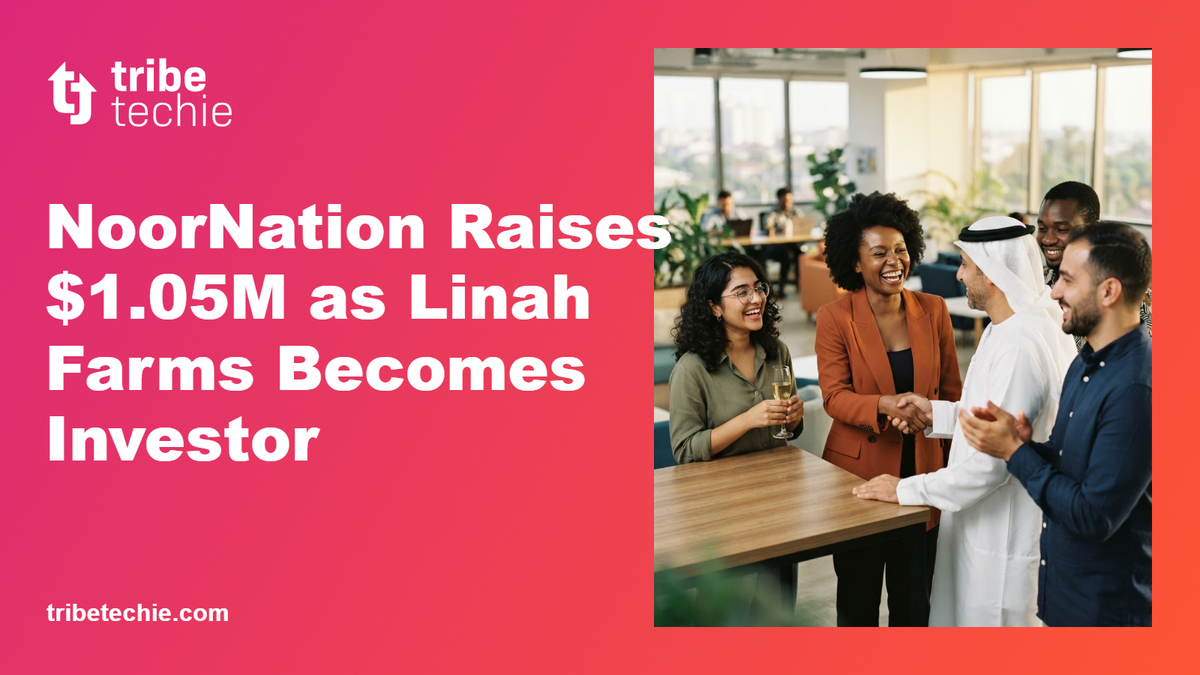
Egypt's NoorNation has raised $1.05 million from Linah Farms, Catalyst Fund and KBW Ventures to expand infrastructure and provide accessible NoorNation solar irrigation solutions.
The investment marks a shift in the two companies' relationship. After deploying NoorNation's solar systems across its farms, agricultural school and Sultan Gardens Resort in Sharm El Sheikh, Linah Farms has moved from customer to strategic investor and co-development partner.
Also Read: Anthropic IPO: Valued at $2 Trillion+ as Gulf Funds Invest
The deal also formalises an agreement for NoorNation to build five additional solar stations with a combined capacity of approximately 1.1 megawatts at Linah's operations in the Bahariya Oasis and Minya.
Expanding NoorNation Solar Irrigation
For NoorNation, the funding comes as it expands its commercial solar installations and develops a different way for smaller farmers to access solar-powered irrigation without purchasing the equipment themselves.
Linah Farms' investment followed several projects that gave the agribusiness group firsthand experience with NoorNation's technology.
One of the earliest installations was a hybrid solar-diesel system for a 1,000-metre-deep well at Linah's Medjool date farm in the Bahariya Oasis. The system allows the company to monitor and compare the performance of both power sources.
NoorNation later installed a solar-and-battery system at Linah's agricultural school for palm cultivation, followed by a 400 kW solar installation at the group's 520-room Sultan Gardens Resort in Sharm El Sheikh.
According to NoorNation founder and CEO Ragy Ramadan, the Bahariya installation has saved Linah more than EGP 3 million in diesel costs, while the resort's solar system has reduced its electricity bill by more than EGP 2.2 million. These are company-reported savings.
Strategic Investment Partnerships
Linah's decision to invest followed nine months of due diligence, according to EnterpriseAM. The relationship now goes beyond supplying solar equipment.
Linah will also help develop and finance NoorNation's solar irrigation service for smallholder farmers.
That is an interesting commercial pathway for climate-tech startups. A successful deployment can demonstrate a product's value to a customer, build a longer-term business relationship, and eventually open the door to an investment partnership.
One of NoorNation's next priorities is expanding its Solar Irrigation-as-a-Service (SIaaS) model.
The Solar Irrigation-as-a-Service Model
The problem it addresses is straightforward. Farmers who depend on diesel-powered pumps face recurring fuel expenses, while switching to solar irrigation can require a substantial upfront investment.
Go deeper on GCC & Africa tech — $9.99/month.
Deep dives and investor insights the free digest doesn't cover.
For smaller farms, purchasing and installing a solar pumping system may simply be unaffordable. NoorNation's model changes how farmers pay for the equipment.
Instead of buying a complete solar irrigation system, farmers receive a solar-powered LifeBox unit installed by NoorNation. The startup then charges for water based on usage time, letting farmers pay by the hour instead of covering the equipment cost upfront.
The model also shifts farmers from traditional flood irrigation to drip irrigation, which can reduce water waste. Farmers can pay through the myFawry app, and ownership of the installed equipment transfers to the farmer after five to seven years.
NoorNation says it works through Community Development Associations to manage its agreements and reduce payment risks.
The company already has three revenue-generating pilots, including one in Aswan developed with the World Food Programme and the Adaptation Fund. Linah Farms is expected to support the model alongside partners including the World Food Programme.
Company Growth and Future Outlook
Founded in 2021 by Ragy Ramadan and Mohamed Khaled, NoorNation develops decentralised clean-energy and water infrastructure for agricultural businesses, rural communities and other users with limited access to conventional utilities.
Its flagship LifeBox system provides solar-powered electricity and water for applications such as irrigation and desalination. The company also supplies grid-connected solar installations for larger commercial operations.
NoorNation has installed about 66 projects with a combined capacity of 7 MW across 13 Egyptian governorates, serving more than 5,200 feddans, according to its founder. It also has projects in the UAE and has supplied two LifeBox desalination units to hospitals in Tajikistan in collaboration with UNICEF.
The company's manufacturing and assembly operations are based in Abu Rawash, Egypt, giving it a local production base as it expands its installations and service offerings.
The immediate priority is delivering the five additional solar stations for Linah Farms, with a combined capacity of about 1.1 MW. At the same time, NoorNation plans to expand SIaaS and make its pay-per-use irrigation service available to more farmers.
These two areas give the startup different routes to growth. Commercial installations provide solar infrastructure for businesses with larger energy needs, while SIaaS offers a recurring service model for farmers who cannot afford to buy solar equipment outright.
The bigger test will be whether NoorNation can scale the irrigation model beyond its initial pilots while keeping prices affordable, equipment reliable, and a payment structure that works for smallholder farmers.
For Linah Farms, the investment creates a closer relationship with a technology provider whose systems are already supporting its operations. For NoorNation, it brings a commercial customer into its investor base as the company works to expand its reach.
And for Egypt's agricultural sector, the opportunity is worth watching: solar irrigation could become more accessible when farmers no longer have to bear the full cost of installing the infrastructure before they can use it.
Engagement