

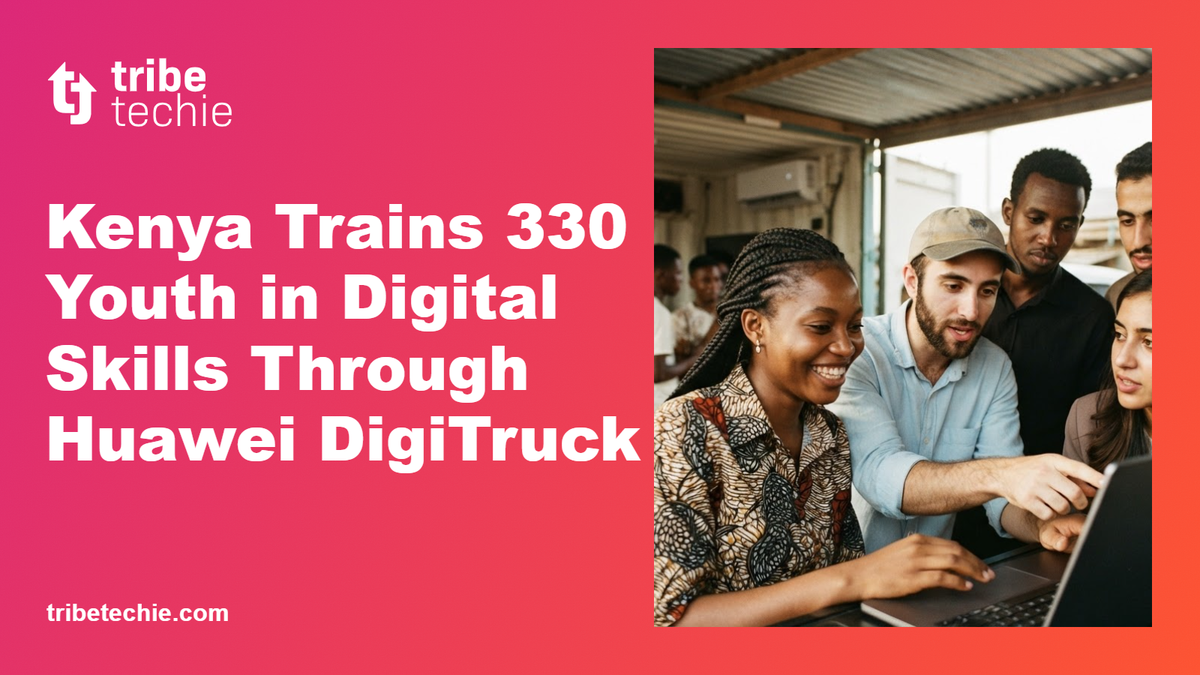
Kenya is actively closing the connectivity gap by providing digital skills training to 330 young people through Huawei’s solar-powered DigiTruck. As the country expands its digital infrastructure, initiatives like this ensure that rural communities are not left behind in the evolving digital economy.
The graduates were recognized at a ceremony in Nyaru, Keiyo South. The event was attended by Energy and Petroleum Cabinet Secretary Opiyo Wandayi, Elgeyo Marakwet Senator William Kisang, Huawei representative Adam Lane, and Keiyo South Member of Parliament Gideon Kimaiyo.
Also Read: G42 Weighs US Ownership to Secure Advanced AI Chips
John Kipchumba Tanui, principal secretary in Kenya’s State Department for ICT and Digital Economy, emphasized that digital skills must develop alongside connectivity. This holistic approach is essential if more citizens are to participate meaningfully in the digital economy.
Expanding Digital Skills Training via Mobile Tech
The DigiTruck provides a mobile training environment that brings digital education closer to communities. Many of these areas face barriers when attempting to access conventional technology training.
The Keiyo South cohort received hands-on instruction. This training was specifically designed to help them use technology for further learning, employment, and entrepreneurship.
Tanui encouraged the graduates to share their knowledge with others. He urged them to pursue more advanced digital skills and use technology to create opportunities rather than simply consume digital services.
Building Kenya's Digital Infrastructure
This program aligns with Kenya's ongoing efforts to expand digital infrastructure. Key initiatives include the National Digital Superhighway and last-mile fiber connectivity projects.
Go deeper on GCC & Africa tech — $9.99/month.
Deep dives and investor insights the free digest doesn't cover.
The government has increasingly emphasized that expanding internet access alone is insufficient. Citizens also need the skills to use digital services, find economic opportunities online, and participate in a technology-driven economy.
The ministry noted that the DigiTruck initiative highlights the role of partnerships. Collaboration between government, technology companies, and community organizations is vital for extending digital inclusion beyond major urban centers.
The Role of TECH4ALL Partnerships
Huawei delivered the program through its TECH4ALL initiative. They worked in close cooperation with Computers for Schools Kenya (CFSK) and government partners.
The Office of the Data Protection Commissioner, Konza Technopolis, and the ICT Authority were also represented at the graduation ceremony. The event also recognized winners of the DigiTruck Innovation Competition, highlighting projects developed as part of the broader skills initiative.
Why It Matters to Africa
Kenya's experience reflects a broader challenge across Africa: expanding connectivity does not automatically translate into digital participation.
As governments invest in broadband, fiber networks, and public Wi-Fi, focused training programs help turn that infrastructure into practical economic opportunities for young people.
The DigiTruck model demonstrates how solar-powered, mobile facilities can reach communities far from major technology hubs. For countries working to close the digital divide, combining connectivity with accessible skills programs is a critical step in building a robust, modern workforce.
Engagement