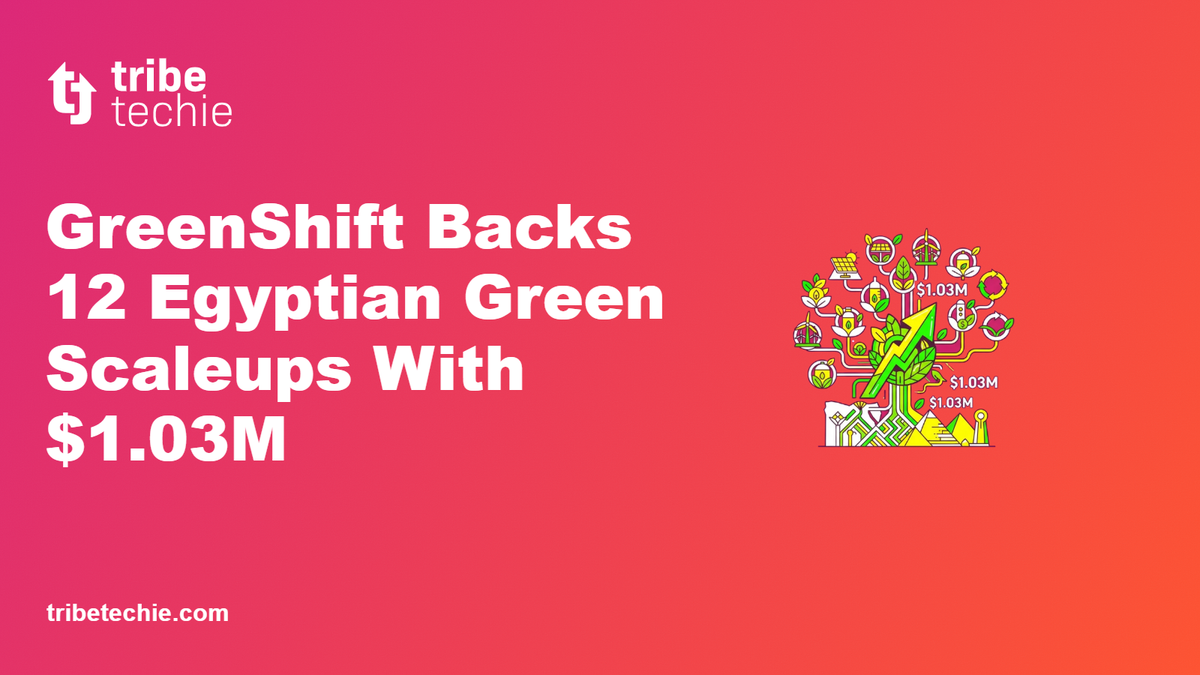
Egypt's GreenShift Programme has successfully graduated 12 Egyptian green scaleups backed by EGP 57.5 million, supporting recycling, sustainable materials and clean technology.
The graduation took place at the GreenShift Summit in Cairo on October 27, hosted by Nahdet El Mahrousa in partnership with the German development agency Deutsche Gesellschaft für Internationale Zusammenarbeit (GIZ). The European Union and German Federal Government co-funded the programme.
Also Read: du and ZTE Launch Upper 6GHz Technology in UAE
Supporting Egyptian Green Scaleups
The 12 businesses, based in Greater Cairo and the Delta, received acceleration support to help commercialise their products, strengthen operations and increase production capacity. The program's approach also addresses one of the biggest challenges facing growing green enterprises: the cost of acquiring the machinery and equipment needed to scale.
GreenShift received 1,353 applications and trained 46 fellows through approximately 160 hours of training, consultations and a retreat. It also provided 18 fellows with EGP 1.3 million in productive assets and helped eight of the 12 funded businesses complete licensing and business formalisation procedures.
These interventions address different stages of business growth. While training and consultations help founders strengthen their business models, productive assets support their ability to manufacture and deliver products. Licensing assistance, meanwhile, helps businesses meet the requirements needed to operate more formally and access wider markets.
Scaling Sustainable Innovation
The summit made the importance of that support clear. GIZ highlighted the high upfront cost of equipment as a major obstacle for green businesses seeking to increase production. Funding machinery and improving production processes can help companies move beyond small-scale operations towards commercial supply.
The graduating companies are working across different parts of Egypt's green economy. Their solutions range from converting waste into industrial materials to creating new products from agricultural by-products.
TileGreen Tech uses patented technology to transform hard-to-recycle plastic waste into durable building materials. Tilestic converts single-use plastics into tiles, paving stones and roof tiles.
Green Cycle for Waste Management collects and processes post-consumer plastic waste into certified raw materials for local manufacturers. These businesses target opportunities in construction and manufacturing, where recycled materials can feed into existing supply chains.
EGYMAG Biotechnology uses black soldier fly larvae to convert organic waste into protein, oil and fertiliser. Extractor Co. produces essential oils through a circular process that returns plant residues to the soil.
Mycelium uses mushroom-based technology to transform agricultural waste into mushrooms and alternatives to conventional plastics for packaging and construction.
Market Impact and Future Growth
Up-Fuse repurposes plastic and textile waste into everyday products through a slow-fashion approach. ZEE makes circular footwear from discarded shoes and other waste materials.
Go deeper on GCC & Africa tech — $9.99/month.
Deep dives and investor insights the free digest doesn't cover.
PLANQ Electronics develops upgradable computers using recycled materials and repurposed laptop batteries. Its approach focuses on extending the useful life of electronic products rather than relying entirely on new materials.
Yadawee produces and exports handmade Egyptian crafts made by local and refugee artisans. Mrkoon operates a business-to-business marketplace connecting companies with buyers and sellers of scrap and surplus materials.
VeryNile combines Nile clean-up activities with recycling, environmental education and community development.
Overcoming Commercial Barriers
Together, the 12 businesses illustrate how circular economy models can create commercial opportunities from materials that would otherwise become waste. For many sustainability-focused businesses, developing a product is only the beginning.
A company may have a workable recycling process or a product made from recovered materials, but scaling up requires machinery, production facilities, reliable suppliers, and access to customers. This creates a difficult gap between proving a solution works and building a business that can supply it at scale.
GreenShift addresses this gap by combining investment with practical business support. Its support for productive assets and licensing is particularly relevant to companies moving toward manufacturing, where production capacity and regulatory requirements can determine whether a business is ready to serve larger customers.
Ecosystem and Industry Integration
The programme also brought together representatives from government institutions, investors, development organisations and private companies at the Cairo summit. Participants included the Ministry of Local Development and Environment, the National Solid Waste Management Programme, the Industrial Development Authority, the European Bank for Reconstruction and Development, and other ecosystem organisations.
These connections could help businesses identify potential customers, partners and routes into existing supply chains. However, commercial growth will ultimately depend on whether their products can compete on price, quality and reliability.
The 12 businesses now face the challenge of turning programme support into sustained commercial growth. For companies producing recycled construction materials, that means securing manufacturers and construction businesses willing to use their products. For those processing organic or agricultural waste, it means developing reliable supply chains and customers for their outputs.
The same applies to businesses extending product lifecycles through electronics refurbishment, fashion and recycling. Their ability to increase production without losing cost control will be key to long-term viability.
GreenShift has helped these companies move closer to that next stage, but graduation is not the finish line. Their progress in production capacity, market access, licensing and revenue will offer a more concrete measure of the programme's impact.
For Egypt's green economy, the opportunity is to turn these individual solutions into businesses that can supply local industries, create jobs and make better use of the country's resources.
Engagement