
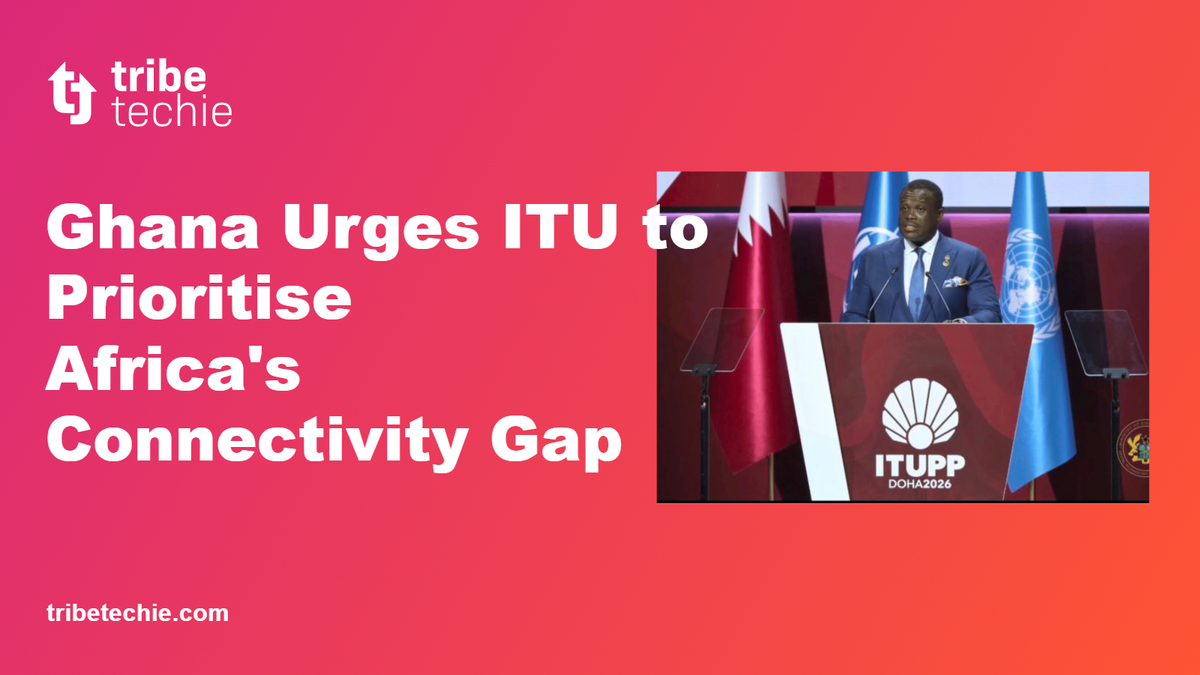
Ghana urges the ITU to prioritise last-mile connectivity, AI infrastructure, and digital inclusion, as addressing Africa's connectivity gap remains a top priority, with 58% of the continent still offline.
Minister for Communication, Digital Technology and Innovations Samuel Nartey George made the call at the 2026 ITU Plenipotentiary Conference (PP-26), which opened in Doha, Qatar, on November 9.
Also Read: Gabon Launches Strategic National Satellite Strategy
He urged ITU member states to ensure that the organisation's next strategic agenda delivers practical improvements. This is particularly important for underserved communities where access to reliable internet remains limited.
Tackling Africa's Connectivity Gap
The challenge is significant. According to the ITU's 2026 Facts and Figures report, only 42% of Africa's population uses the internet.
This means approximately 58% of the continent's population remains offline, compared with a global internet usage rate of 76%.
For Ghana, the priority is to translate international digital development commitments into better connectivity and affordable access.
They are also pushing for stronger technological capacity across all African countries.
Strategic Agenda for Digital Development
George called for the ITU's next four-year strategic and financial agenda to prioritise practical outcomes. Key goals include investment in last-mile connectivity and more equitable access to radio-frequency spectrum and satellite orbits.
Last-mile connectivity refers to the infrastructure that connects existing telecommunications networks to individual households, businesses, and communities. Without these connections, major investments in national fibre networks may not reach people in remote areas.
Spectrum access is also vital because mobile operators rely on radio frequencies to deliver wireless connectivity. Satellite orbit and frequency coordination further influence the availability of satellite-based internet services.
Go deeper on GCC & Africa tech — $9.99/month.
Deep dives and investor insights the free digest doesn't cover.
Global Governance and Digital Participation
The ITU Plenipotentiary Conference is key because it sets the organisation's overall direction and elects members of its governing bodies. The 2026 conference runs from November 9 to 27.
Alongside his call for international cooperation, George outlined Ghana's efforts to develop infrastructure and skills. One priority is establishing a National AI Compute Centre to support local innovation.
The proposed facility is intended to strengthen local computing capacity and provide resources for organisations developing artificial intelligence. Ghana is also implementing its One Million Coders initiative to equip citizens with essential digital skills.
Cybersecurity and International Leadership
These initiatives address different parts of the same challenge. AI research requires computing resources, while individuals need technical skills to participate in the digital economy.
Developing these areas helps expand local innovation while reducing dependence on foreign technological capabilities. George also highlighted Ghana's cybersecurity progress and its readiness to share expertise with other ITU member states.
Ghana received Tier 1 status in the ITU's 2024 Global Cybersecurity Index. This recognises national commitments in legal, technical, and organisational measures.
Future Outlook for Digital Inclusion
The minister identified Ghana's experience with Computer Emergency Response Teams (CERTs) as a model for regional capacity-building. Beyond policy, Ghana is seeking support for its re-election to the ITU Council for Region D.
Ghana's position reflects a wider challenge facing the digital economy. While governments invest in AI, a large share of the population still lacks basic internet access.
Closing that gap requires more than expanding network coverage. Affordability, digital literacy, and reliable electricity also influence whether people can use internet services meaningfully.
The outcome of PP-26 will indicate how much emphasis the ITU's next agenda places on these priorities. For Africa, the true test will be whether commitments translate into wider access to digital opportunities.
Engagement