
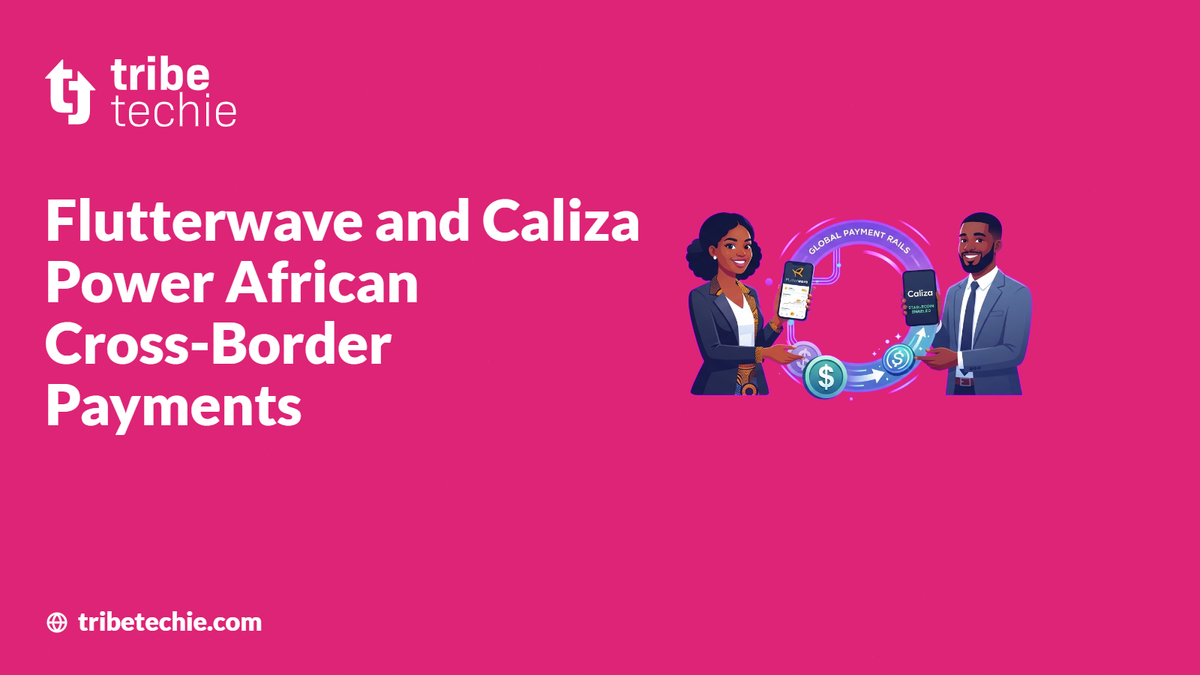
Flutterwave is partnering with Caliza to transform cross-border payments for African businesses by providing access to USD accounts and global payment rails.
Under the partnership, Flutterwave customers will be able to access dedicated USD accounts connected to domestic and international payment networks, including ACH, Fedwire, RTP, and SWIFT.
The infrastructure will allow businesses to receive, transfer, and convert funds across multiple fiat currencies and stablecoins through Flutterwave's platform.
The partnership targets one of the persistent challenges facing African businesses operating internationally: accessing reliable USD liquidity and moving money across borders without the delays and costs associated with traditional correspondent banking.
Also Read: Valu IKEA Egypt Renew Deal With 0% Interest Payment Plans
Expanding Cross-Border Payments Access
Through Caliza's financial infrastructure, Flutterwave can provide customers with access to USD accounts and payment rails through a single platform.
Businesses will be able to receive and send USD payments through networks including ACH, Fedwire, RTP, and SWIFT, while also using stablecoins to move value between supported currencies and accounts.
The model is designed to simplify cross-border payments for African businesses that work with international customers, suppliers, employees, and partners.
Flutterwave said the infrastructure can support use cases ranging from retail remittances and payroll to supplier payments and treasury transfers exceeding $1 million.
Unified Financial Infrastructure
Olugbenga “GB” Agboola, CEO of Flutterwave, said the partnership is intended to give African businesses access to global financial infrastructure without requiring them to manage the underlying complexity.
“We wanted to give African businesses access to global payment infrastructure without passing that complexity on to them,” Agboola said.
He added that Caliza allows Flutterwave to bring different financial services, currencies, and payment rails together within a single infrastructure layer while maintaining control of the customer experience.
A key component of the partnership is the use of stablecoins such as USDC and USDT alongside traditional payment networks.
The Role of Stablecoins in Finance
Stablecoins can allow businesses to transfer dollar-denominated value digitally without relying exclusively on correspondent banking networks.
For companies operating across multiple African markets, this could potentially reduce settlement times and transaction costs in certain cross-border payment flows.
Go deeper on GCC & Africa tech — $9.99/month.
Deep dives and investor insights the free digest doesn't cover.
The approach does not replace traditional payment infrastructure. Instead, Flutterwave and Caliza are combining conventional networks such as SWIFT and ACH with blockchain-based settlement options.
That combination could be particularly useful for businesses that need to move between traditional bank accounts and digital assets while maintaining exposure to US dollar liquidity.
Treasury Management and Scalability
The partnership extends beyond Flutterwave's customer-facing payment services.
The infrastructure will also support Flutterwave's treasury operations, allowing the company to manage USD and stablecoin balances, fund operating accounts, and move large-value positions between liquidity reserves and custody platforms.
This creates an infrastructure layer that can support both day-to-day payments and larger treasury requirements.
For Flutterwave, the model could provide greater flexibility in managing liquidity across different payment channels while allowing customers to interact with the underlying infrastructure through a single platform.
Why it matters to Africa
The partnership addresses a major structural challenge for African businesses: cross-border payments remain expensive, fragmented, and difficult to navigate across many markets.
Businesses trading internationally often need access to foreign currencies, overseas bank accounts, multiple payment networks, and correspondent banking relationships. These requirements can create friction for companies trying to receive international payments, pay suppliers, manage payroll, or move working capital across borders.
USD-backed stablecoins could provide another route for moving dollar-denominated value, particularly when integrated with established payment infrastructure.
Future of African Fintech
Flutterwave's approach is notable because it combines both worlds: traditional rails such as SWIFT, ACH, Fedwire, and RTP alongside stablecoin infrastructure.
For African businesses, that could mean more options for managing international payments and liquidity without having to build relationships with multiple financial infrastructure providers.
The partnership also reflects a broader evolution in African fintech. The sector is increasingly moving beyond consumer payments toward financial infrastructure for businesses operating across borders.
As African companies expand internationally and intra-African trade grows, demand for faster and more accessible payment, foreign-exchange, and treasury infrastructure is likely to increase.
Stablecoins could become part of that infrastructure, particularly for businesses that need faster access to dollar liquidity. However, adoption will continue to depend on local regulations, banking relationships, liquidity, and the ability of fintech to provide appropriate compliance and risk controls.
The bigger takeaway is that Africa's cross-border payments market is moving toward a more interconnected model, where traditional financial networks and blockchain-based settlement can operate alongside each other to make international commerce easier for businesses.
Engagement